Cape Coral Has Three Canal Systems
Your canal type determines your dock's materials, permits, timeline, and price. Cape Coral has three distinct systems, and each one creates different requirements for construction.
A dock designed for a freshwater canal will corrode within three years in saltwater. Gulf access properties face tidal fluctuations that freshwater canals don't see. Sailboat canals require deeper water clearances that change your piling lengths and costs. You need to know your canal type before you build.
Gulf Access Canals
Gulf access canals connect to the Caloosahatchee River and, through it, the Gulf of Mexico. These are the most desirable properties in Cape Coral and the most demanding for dock construction.
What Defines Gulf Access
- Direct connection to the Caloosahatchee River
- Tidal water levels (2-3 foot range)
- Saltwater environment
- Variable depths depending on distance from river
- May have bridge restrictions limiting boat height
How Gulf Access Affects Your Dock
Materials Requirements
Saltwater corrodes any metal below 316 stainless steel and rots wood without marine-grade pressure treatment. We use:
- .60 CCA pressure-treated pilings (higher retention than freshwater)
- 316 stainless steel hardware on every fastener
- Marine-grade brackets and fasteners
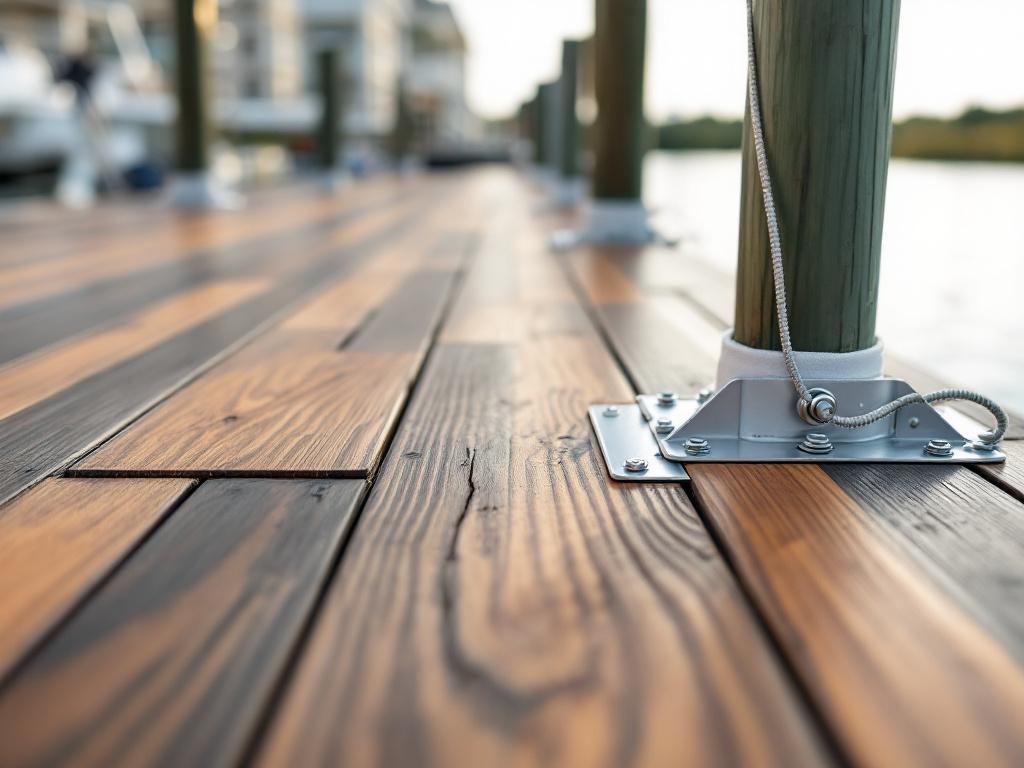
- Pile wraps on every saltwater installation
Structural Considerations
Tidal fluctuations mean your dock must function at both high and low tide:
- Piling height must accommodate tide range plus freeboard
- Walkway slope can't be too steep at low tide
- Boat lift positioning must clear bottom at lowest water
Permitting Complexity
Gulf access docks are more likely to trigger FDEP environmental review. Properties closer to the Caloosahatchee receive more scrutiny. We add 2-3 weeks to our permitting timeline for Gulf access properties near major waterways.
Where You'll Find Gulf Access
- Yacht Club area (historic, established)
- Chiquita Boulevard corridor
- Burnt Store and southwest Cape Coral
- Pelican and Tropicana canal systems
- Cape Coral Parkway south corridor
Gulf Access Investment Range
| Dock Type | Typical Cost | Notes |
|---|---|---|
| Basic single-slip | $25,000 – $35,000 | Pressure-treated wood, standard hardware |
| Mid-range composite | $35,000 – $55,000 | Composite decking, stainless hardware, upgraded railings |
| Premium with lift | $55,000 – $85,000 | Covered slip, boat lift, high-end finishes |
| Luxury multi-slip | $80,000 – $150,000+ | Multiple slips, architectural roof, extensive decking |
Freshwater Canals
Freshwater canals are landlocked. They don't connect to the river or Gulf. These systems offer protected water for kayaking, paddleboarding, and small motorboats, without saltwater corrosion concerns.
What Defines Freshwater
- No connection to Caloosahatchee River
- Protected from tidal fluctuations
- Non-saltwater (may be brackish in some areas)
- Shallower than Gulf access (usually)
- Lower permit scrutiny
How Freshwater Changes Your Dock
Materials Options
Without saltwater corrosion, you have more flexibility:
- Standard .40 CCA pressure-treated pilings (adequate)
- Galvanized hardware acceptable (though we still prefer stainless)
- Wider decking options, including more wood varieties
- Less aggressive pile wrap requirements
Structural Simplicity
No tides means simpler engineering:
- Shorter pilings (less water depth variation)
- Consistent walkway slope
- Easier boat lift positioning
- Simpler permitting through Lee County
Limitations
Freshwater access has tradeoffs:
- No direct Gulf access for offshore fishing
- Limited boat size (shallower water)
- No tidal flushing (water quality varies)
- Lower resale value compared to Gulf access
Where You'll Find Freshwater
- Northwest Cape Coral (north of Pine Island Road)
- Central Cape interior
- Areas distant from river corridors
- Many older neighborhoods
Freshwater Investment Range
| Dock Type | Typical Cost | Notes |
|---|---|---|
| Basic single-slip | $18,000 – $28,000 | Lower material specs acceptable |
| Mid-range composite | $28,000 – $45,000 | Composite decking, still recommended in Florida sun |
| With lift | $45,000 – $65,000 | Lift suitable for freshwater use |
Sailboat Canals
Sailboat canals are a subset of Gulf access canals with one critical difference: no bridge restrictions. These allow boats with tall masts to reach open water without lowering or dismasting.
What Defines Sailboat Access
- Direct Gulf access with no fixed bridges
- Minimum 25-foot clearance at all tide levels
- Deeper water (6+ feet at mean low tide)
- Premium property values
How Sailboat Access Raises Requirements
Deeper Water Means Deeper Pilings
Sailboat canals run deeper than standard Gulf access:
- Longer pilings driven deeper into the bottom
- More expensive materials (longer pressure-treated timber costs more)
- Specialized equipment for deep-water pile driving
- Higher labor costs for installation
Navigational Clearance Engineering
Docks in sailboat canals can't impede passing traffic:
- Dock placement relative to property lines
- Overhang restrictions on roof structures
- Height limits on vertical elements
Premium Expectations
Owners of sailboat-access properties invest more in their docks. These docks support high-value vessels and match waterfront homes priced accordingly. Finish quality, materials, and design specifications run higher.
Where You'll Find Sailboat Access
- Chiquita Boulevard (north and south)
- Embers Parkway corridor
- Tropicana Parkway west
- Select Burnt Store canals
- Specific Cape Coral Parkway canals
Sailboat Access Investment Range
| Dock Type | Typical Cost | Notes |
|---|---|---|
| Standard deep-water | $35,000 – $50,000 | Deeper pilings, premium materials |
| High-capacity slip | $50,000 – $80,000 | Large vessel accommodation, heavy-duty hardware |
| Luxury with boathouse | $80,000 – $150,000+ | Architectural roof, high-end finishes, extensive decking |
Identifying Your Canal Type
Not sure what kind of canal you have?
| Indicator | Gulf Access | Freshwater | Sailboat |
|---|---|---|---|
| Can you boat to Sanibel? | Yes | No | Yes |
| Do water levels change daily? | Yes (tides) | No | Yes (tides) |
| Are there fixed bridges nearby? | Maybe | N/A | No (the defining feature) |
| Can you see the Caloosahatchee? | Usually | No | Usually |
| Is the water salty? | Yes | No | Yes |
We identify your canal type during our initial waterfront assessment. This single piece of information drives every recommendation we make about your dock.
Why Canal Type Determines Everything
Your canal type affects:
- Material costs. Saltwater requires marine-grade hardware that costs 3-4x more than freshwater-grade.
- Piling length. Deeper water needs longer pilings, which cost more and require different equipment.
- Permitting timeline. Gulf access near sensitive waterways triggers longer environmental review.
- Maintenance schedules. Saltwater docks need more frequent inspection and faster hardware replacement.
- Boat lift sizing. Sailboat canals often mean larger boats, which need higher-capacity lifts.
- Insurance considerations. Some carriers differentiate coverage based on waterway type.
Two docks that look identical above water can have different specifications, costs, and timelines based on what's below the surface and where that water flows.
Want specifics for your waterfront? During our free assessment, we identify your exact canal type and explain how it affects your dock design, materials, permitting, and budget. Schedule your waterfront evaluation or call (239) 360-6861.